
Benthic macroinvertebrates — bottom-dwelling invertebrates visible to the naked eye — occupy a central role in the biological monitoring of running waters. In Germany, their use as water quality indicators is formalised within the national implementation of the EU Water Framework Directive (Richtlinie 2000/60/EG) and the associated Oberflächengewässerverordnung (OGewV). The presence, absence, and relative abundance of specific invertebrate taxa allow ecologists to infer organic load, dissolved oxygen dynamics, flow regime, and substrate conditions at a sampling site.
Unlike physicochemical measurements, which reflect conditions at the moment of sampling, biological communities integrate environmental conditions over time. A sample collected in late summer, for instance, reflects not just that day's water temperature or oxygen concentration, but weeks or months of cumulative exposure. This temporal integration is one of the principal reasons macroinvertebrate indices remain a cornerstone of German and European water quality assessment.
EPT Taxa and Their Diagnostic Value
The three insect orders Ephemeroptera (mayflies), Plecoptera (stoneflies), and Trichoptera (caddisflies) — collectively abbreviated as EPT — are among the most widely used indicator groups in stream ecology. Species within these orders are generally intolerant of low dissolved oxygen and high organic pollution. Their richness and density at a site provide a rapid indication of ecological condition.
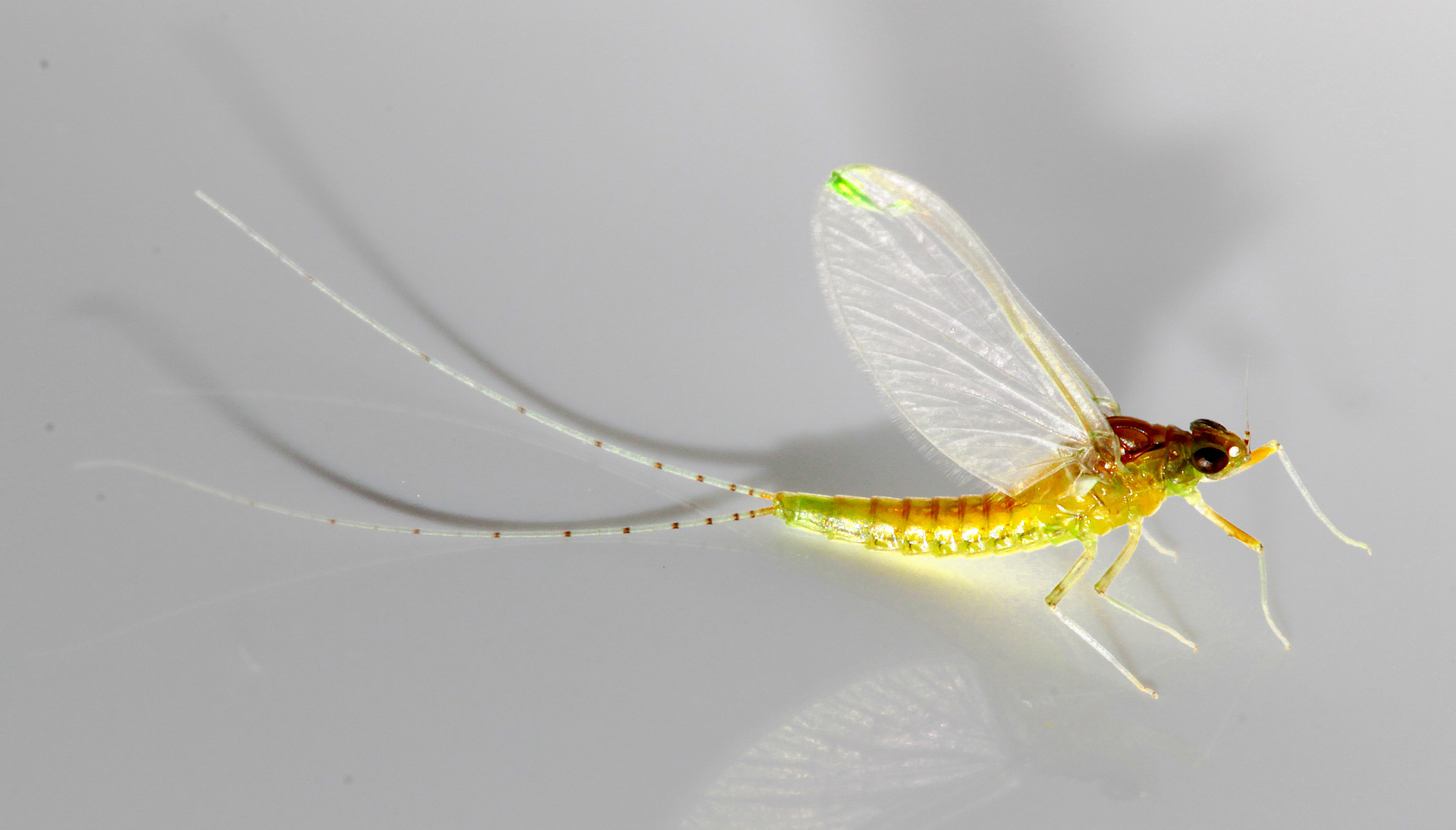
Ephemeroptera larvae inhabit stream substrates from cobble riffles to sandy runs. Baetidae and Heptageniidae are particularly common in German streams and have different tolerance ranges: Baetis rhodani tolerates moderate enrichment, while heptageniid species like Heptagenia sulphurea are restricted to well-oxygenated, oligotrophic reaches. Plecoptera (stoneflies) are considered especially sensitive; the presence of multiple stonefly genera at a site is a strong indicator of good hydromorphological and chemical quality. In many impacted German lowland streams, stoneflies are entirely absent. Trichoptera larvae construct cases from mineral or organic material and often filter fine particulate organic matter from the water column. Their case construction materials can reflect local substrate availability and organic content.
The German Saprobie System
Germany applies a saprobie index to classify running water quality based on the organic pollution tolerance of individual indicator taxa. Each species is assigned a saprobie value (s) between 1.0 and 4.0 and an indicative weight (g) reflecting how reliably it indicates particular conditions. The saprobien index (SI) for a site is calculated as a weighted mean of the saprobie values of all indicator taxa found.
| Quality Class | Saprobie Index Range | Designation | Typical Conditions |
|---|---|---|---|
| I | 1.0 – 1.5 | Oligosaprobic | Very low organic load, high dissolved oxygen, oligotrophic headwaters |
| I–II | 1.5 – 1.8 | Oligo-β-mesosaprobic | Low organic load, slightly elevated nutrient levels |
| II | 1.8 – 2.3 | β-Mesosaprobic | Moderate organic enrichment, diverse community but EPT richness reduced |
| II–III | 2.3 – 2.7 | β-α-Mesosaprobic | Elevated organic load, reduced EPT, Chironomidae and Oligochaeta increasing |
| III | 2.7 – 3.2 | α-Mesosaprobic | Heavy organic pollution, low oxygen, Tubifex and pollution-tolerant taxa dominate |
| III–IV | 3.2 – 3.5 | α-Meso-polysaprobic | Severe pollution, near-anoxic conditions at times |
| IV | 3.5 – 4.0 | Polysaprobic | Extreme pollution, mostly bacteria and anaerobic organisms survive |
The calculation methodology is defined by the LAWA (Bund/Länder-Arbeitsgemeinschaft Wasser), and saprobie assessment is one component within the broader biological quality element for macroinvertebrates. The full assessment under OGewV also includes fauna index (taxonomic richness), fish species composition, and comparison with type-specific reference communities (Leitbilder).
Key Indicator Taxa in German Streams
Several taxa appear consistently across German bioassessment datasets and are particularly useful for rapid field evaluation. The following summarises major groups.
Gammarus fossarum (Bachflohkrebs)
Gammarus fossarum is a freshwater amphipod crustacean abundant in clean, well-oxygenated, small to medium-sized streams across the German uplands (Mittelgebirge). It tolerates mild organic enrichment (saprobie value approximately 1.7–2.0) but declines sharply with increased pollution or the addition of organic micropollutants such as pesticides. Its sensitivity to chemical contamination beyond the saprobie system makes it a useful supplementary indicator in ecotoxicological studies. G. fossarum is a dominant shredder in many German beech forest streams, processing coarse particulate organic matter (CPOM) such as autumn leaf litter.

Chironomidae (Non-biting Midges)
Chironomid larvae are among the most abundant and taxonomically diverse macroinvertebrate families in German streams. The family spans a very wide tolerance range: some genera (Rheotanytarsus, Eukiefferiella) are restricted to fast-flowing, well-oxygenated water, while others (Chironomus, Polypedilum) tolerate near-anoxic conditions. A site dominated exclusively by Chironomus-type larvae, in the near-absence of other taxa, is characteristic of severe organic pollution (quality class III–IV). Accurate chironomid identification typically requires pupal exuviae analysis or larval headcapsule examination.
Simuliidae (Black Flies)
Simuliid larvae attach to stone surfaces in fast-flowing, well-oxygenated riffles, filtering fine particulate organic matter (FPOM) from the current. Their presence in higher abundance indicates clean, running water with adequate current velocity and dissolved oxygen. They are often abundant immediately downstream of springs and in epipotamal reaches of German upland rivers.
Oligochaeta (Tubificid Worms)
Tubificid oligochaetes — particularly Tubifex tubifex — are strongly associated with organic sediment enrichment and low dissolved oxygen. In heavily enriched reaches, they may form dense monocultures in fine-sediment depositional zones. Their hemoglobin-like respiratory pigments allow survival in near-anoxic conditions that exclude most other macroinvertebrates.
Standardised macroinvertebrate sampling in Germany follows the AQEM/STAR protocol adapted by LAWA for national application. A multi-habitat sampling approach is used, with sampling effort proportional to the area of each microhabitat type (riffles, macrophyte beds, fine sediment, etc.). Samples are typically collected in spring (March–April) or autumn (October–November) to coincide with maximum taxonomic richness and avoid post-flood recovery periods.
Habitat Quality and Macroinvertebrate Assemblages
Biological communities do not respond to water chemistry alone. Hydromorphological degradation — channelisation, bank reinforcement, removal of large woody debris, and riparian deforestation — can suppress EPT diversity even in chemically clean water. The HMWB (heavily modified water bodies) category under the WFD recognises this, applying adjusted reference conditions for streams where physical alteration is irreversible.
In the German Mittelgebirge (upland regions including the Eifel, Sauerland, and Schwarzwald), stream macroinvertebrate communities are generally in better condition than in the intensively farmed North German lowlands. Lowland streams draining agricultural catchments often show elevated nitrate and phosphorus, fine sediment accumulation, and reduced EPT richness, even where point-source pollution is controlled.