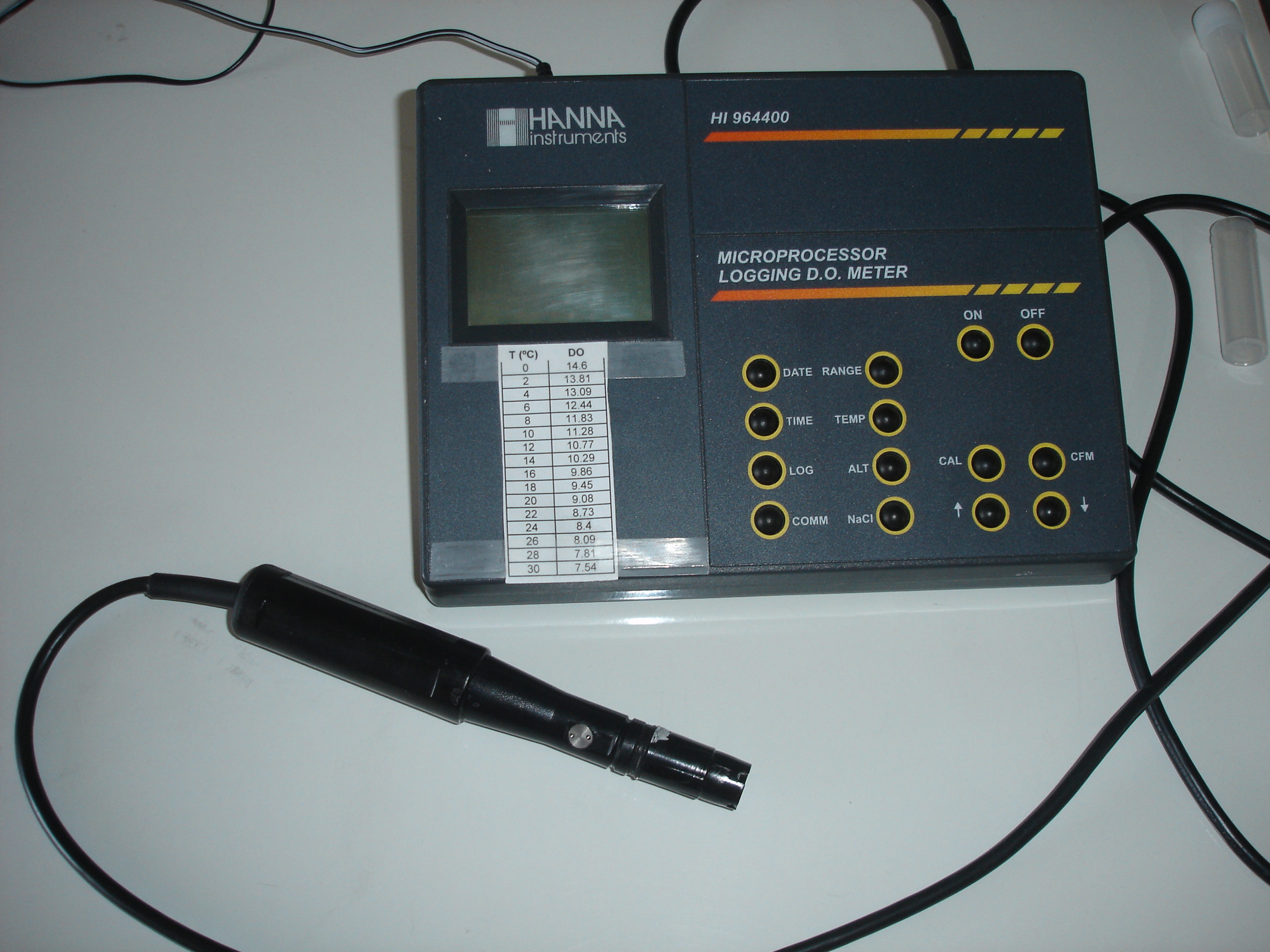
Accurate measurement of water chemistry is essential for characterising the physicochemical status of a stream under the EU Water Framework Directive (WFD). In Germany, chemical monitoring of surface waters follows the requirements of the Oberflächengewässerverordnung (OGewV) and associated technical guidance from the Bund/Länder-Arbeitsgemeinschaft Wasser (LAWA). Field sampling procedures and laboratory analysis methods are defined by applicable DIN EN ISO standards, which ensure comparability of results between monitoring programmes across federal states.
The physicochemical parameters most relevant to freshwater creek ecology fall into two categories: general supporting parameters (oxygen, pH, conductivity, temperature) and nutrient-related parameters (nitrate, ammonium, total phosphorus, orthophosphate). Both categories influence the biological community and are used to interpret biological quality element assessments.
Core Field Parameters
Several physicochemical parameters are measured directly in the field using portable instruments, because removing water samples for later laboratory analysis can alter the measured values significantly — especially for dissolved oxygen and pH, which shift within minutes of collection due to atmospheric exchange and biological activity.
Dissolved Oxygen (DO)
Dissolved oxygen is the single most critical parameter for aerobic macroinvertebrates and fish. In shallow, fast-flowing German upland streams, DO is typically close to atmospheric saturation year-round (8–12 mg/L at typical temperatures). In slower, deeper lowland channels with high algal or macrophyte biomass, pronounced diel oscillations are common: DO peaks in mid-afternoon (photosynthetic production) and drops to its minimum in the early morning hours (nocturnal respiration). Prolonged periods below approximately 4 mg/L exclude most EPT taxa and salmonid fish.
Field measurement uses electrochemical (Clark cell) or optical (luminescence quenching) sensors. The DIN EN ISO 5814 standard specifies validation procedures for Clark-cell sensors; optical sensors follow DIN EN 17218. Calibration with water-saturated air or air-saturated water is performed before each deployment. Both sensor types require temperature compensation, as oxygen solubility decreases substantially with increasing water temperature.

pH
The pH of German stream water reflects local geology, atmospheric deposition history, and biological activity. Streams draining siliceous bedrock (Schwarzwald, Eifel, Sauerland, Bayerischer Wald) are typically poorly buffered (pH 5.5–7.0), while those in limestone and chalk catchments (Schwäbische Alb, Fränkische Alb, Harz) are well-buffered (pH 7.0–8.5). Acidification from historic atmospheric sulphur deposition affected many Mittelgebirge streams; partial recovery has occurred since emission reductions under the Gothenburg Protocol.
Field pH measurement uses glass electrodes calibrated with NIST-traceable buffer solutions (pH 4.00 and 7.00, or 7.00 and 10.00 depending on the expected range). The electrode must be equilibrated in stream water before readings are taken. DIN EN ISO 10523 describes the laboratory method; field measurement follows the same calibration principles but is understood to have higher uncertainty.
Electrical Conductivity
Conductivity (measured in µS/cm) integrates the concentration of all dissolved ionic species — predominantly Ca²⁺, Mg²⁺, Na⁺, K⁺, HCO₃⁻, SO₄²⁻, and Cl⁻. In German streams, conductivity ranges from below 50 µS/cm in very soft, siliceous catchments to several hundred µS/cm in agricultural lowland streams or those draining evaporite geology. Sudden spikes in conductivity can indicate point-source discharge events. Conductivity is measured in the field with a conductivity cell calibrated against potassium chloride standard solutions (DIN EN 27888).
Temperature
Water temperature in German streams follows a seasonal pattern strongly influenced by shading from riparian vegetation, stream size, and altitude. Small, shaded forest streams may remain below 15°C even in summer, while unshaded agricultural channels in the North German lowlands can exceed 25°C during heat events — conditions stressful or lethal for salmonid fish. Temperature is measured in situ with calibrated thermistors or thermocouples. Continuous temperature logging using data loggers is increasingly routine in German monitoring programmes to capture diel and seasonal variation.
Nutrient Parameters: Nitrogen and Phosphorus
Nitrate and Ammonium
Nitrogen enters German streams primarily from agricultural sources — synthetic fertiliser application and manure spreading. The German Nitrates Action Programme (Aktionsprogramm Nitrat), implementing EU Directive 91/676/EEC, sets application limits and timing restrictions, but elevated nitrate concentrations persist in many lowland streams. Ammonium (NH₄⁺) is particularly toxic to fish in its un-ionised form (NH₃); the proportion of un-ionised ammonia increases with pH and temperature, making pH-temperature combinations critical for toxicity assessment.
Nitrate is typically analysed in the laboratory from filtered, preserved samples using ion chromatography (DIN EN ISO 10304) or photometric methods (DIN 38405-D9). Field test kits provide approximate values for reconnaissance but do not meet the precision requirements of official monitoring. Ammonium is measured photometrically (indophenol blue method, DIN 38406-E5) from samples refrigerated and analysed within 24 hours.
Total Phosphorus and Orthophosphate
Phosphorus is typically the growth-limiting nutrient in German freshwaters. Elevated phosphorus concentrations promote algal and macrophyte growth, leading to eutrophication, oxygen depletion in decomposition, and reduced clarity. The OGewV sets annual mean threshold concentrations for orthophosphate (as PO₄-P) differentiated by stream type; for many lowland stream types, the good/moderate boundary is set at 0.1–0.15 mg/L.
Orthophosphate is measured photometrically after reaction with ammonium molybdate and ascorbic acid (DIN EN ISO 6878). Total phosphorus requires prior wet digestion with persulfate to convert organic and particulate phosphorus fractions to orthophosphate before analysis. Samples must be collected unfiltered for total phosphorus and filtered through 0.45 µm membrane filters for dissolved (reactive) phosphorus.
For representative nutrient sampling in small German creeks, spot samples collected during base-flow conditions may underestimate actual loading. A substantial proportion of annual nutrient transport occurs during storm events when agricultural runoff enters the channel. Composite sampling over 24-hour periods, or event-triggered sampling linked to flow monitoring, provides a more complete picture of nutrient dynamics at a site.
Sample Collection, Preservation, and Transport
Correct sample containers and preservation methods are essential to prevent biological degradation or contamination between collection and analysis. The following applies to routine water chemistry sampling at German creek sites.
| Parameter | Container | Preservation | Max Holding Time |
|---|---|---|---|
| Dissolved oxygen | In situ sensor | Measure immediately | — |
| pH | In situ sensor / PE bottle | Measure immediately | 2–4 hours if bottled |
| Conductivity | PE bottle | Refrigerate at 4°C | 24 hours |
| Nitrate | PE bottle (filtered) | H₂SO₄ to pH < 2, or freeze | 24 h refrigerated; 28 days frozen |
| Ammonium | PE bottle | Refrigerate at 4°C; analyse < 24 h | 24 hours |
| Orthophosphate | PE bottle (0.45 µm filtered) | Refrigerate at 4°C | 24 hours |
| Total phosphorus | PE bottle (unfiltered) | H₂SO₄ to pH < 2 | 28 days refrigerated |
All laboratory analyses should be performed by accredited laboratories where official monitoring data are required. For research or reconnaissance purposes, validated portable photometers offer adequate precision for nutrient parameters in the field, provided calibration standards are freshly prepared.
Flow Measurement and Discharge Estimation
Nutrient concentrations alone are insufficient to quantify pollutant loads. Load calculation requires concurrent measurement of discharge (m³/s), which multiplied by concentration gives mass flux (kg/day or kg/year). The Bundesanstalt für Gewässerkunde (BfG) in Koblenz operates the main network of flow gauges on larger German rivers; for smaller creeks, temporary gauging using velocity-area methods (e.g., electromagnetic or acoustic Doppler current profilers) or weirs is often necessary.
The velocity-area method divides the channel cross-section into vertical panels; current velocity is measured at 60% depth (for shallow streams) or at 20% and 80% depth (deeper channels) in each panel, following DIN EN ISO 748. The product of mean velocity and panel area, summed across the cross-section, gives total discharge.
Further Reading and Standards
- DIN Standards (Deutsches Institut für Normung) — EN ISO 10304, EN ISO 6878, EN ISO 5814
- Umweltbundesamt — Fließgewässer
- Bundesanstalt für Gewässerkunde (BfG)
- LAWA Arbeitshilfe zur Umsetzung der EG-WRRL